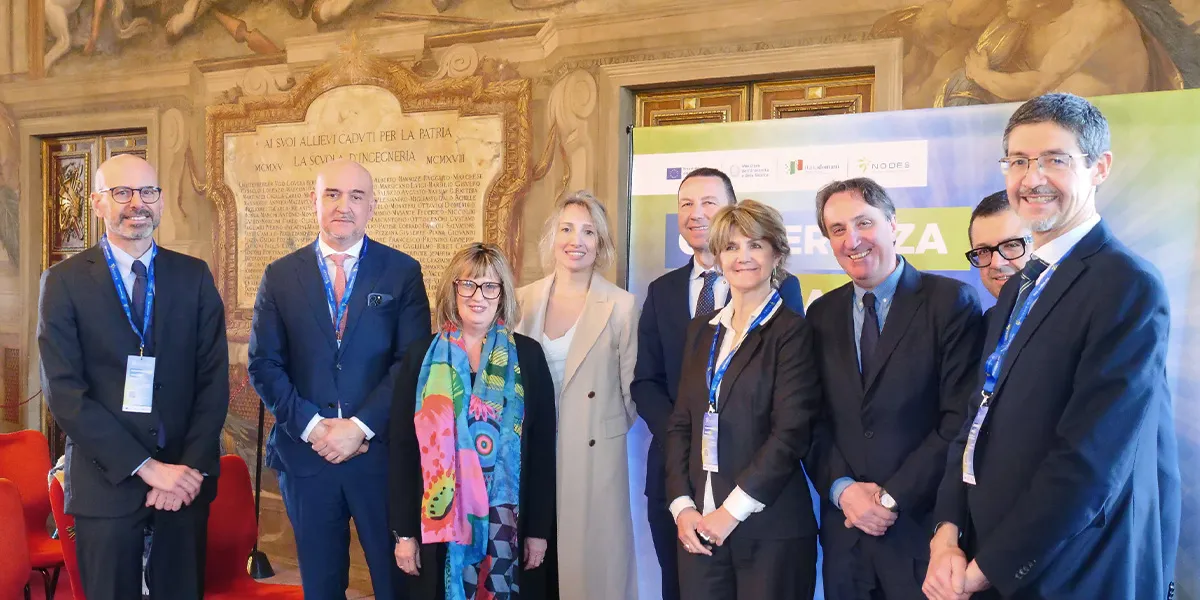
At the Valentino Castle, NODES showcases three years of projects, figures, and collaborations.
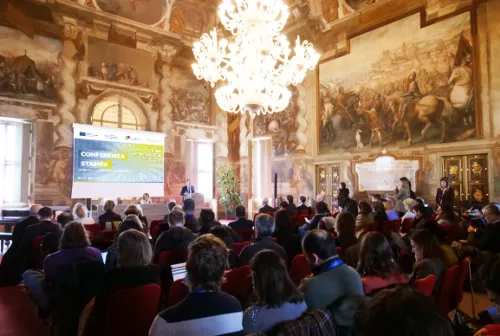
The concluding event of NODES – North-West Digital and Sustainable, the Innovation Ecosystem born within the national program funded by the MUR with PNRR resources, took place in the Hall of Honor of the Valentino Castle. It was an opportunity to take stock of three years of activity that have seen universities, businesses, and local territories collaborate to strengthen technology transfer, support new entrepreneurship, and develop advanced skills for the dual digital and ecological transition.
With funding exceeding €112 million and the involvement of 33 partners, NODES has built a complex and collaborative system capable of connecting universities, research centers, businesses, and public administrations. This journey was also symbolically evoked by the musical opening of the event, which highlighted the “orchestral” capacity of a project founded on the integration of diverse skills.
In her institutional address, Claudia Porchietto, Undersecretary to the Presidency of the Piedmont Region, emphasized that “bringing together university expertise in dialogue with businesses is not easy,” while highlighting the concrete results achieved and expressing the hope that “what has been accomplished can continue into the future.”
The President of the NODES HUB and Rector of the Politecnico di Torino, Stefano Paolo Corgnati, highlighted how the project has helped “remove distrust” between universities and build genuine collaboration, extending also to businesses, particularly smaller ones: “We have had the opportunity to collaborate between universities and, above all, to expand the dialogue with businesses. One of the main issues is the involvement of small and medium-sized enterprises, including micro-enterprises, which often face difficulties in participating in competitive calls.” He added that NODES’ legacy “is not only in the numbers, but in the networks of people and skills that we must continue to nurture. We have shown that the university system is a driver of competitiveness, capable of becoming a catalyst for development – in our case – in the North-West.”
For the Directorate General of the Ministry of University and Research, Fabrizio Cobis described NODES as “a very high-level challenge” that delivered concrete results over three years. “The PNRR was precisely aimed at generating innovations, creating new habits, and fostering a new way of thinking and approaching things. An ambitious challenge that NODES, together with all the other ecosystems, has achieved, managing collectively to spend approximately €5 billion in total.” Corbis emphasized how the program helped to “bring closer those who produce knowledge and those who transform it into value,” demonstrating the research system’s ability to work in an integrated way while meeting ambitious objectives.
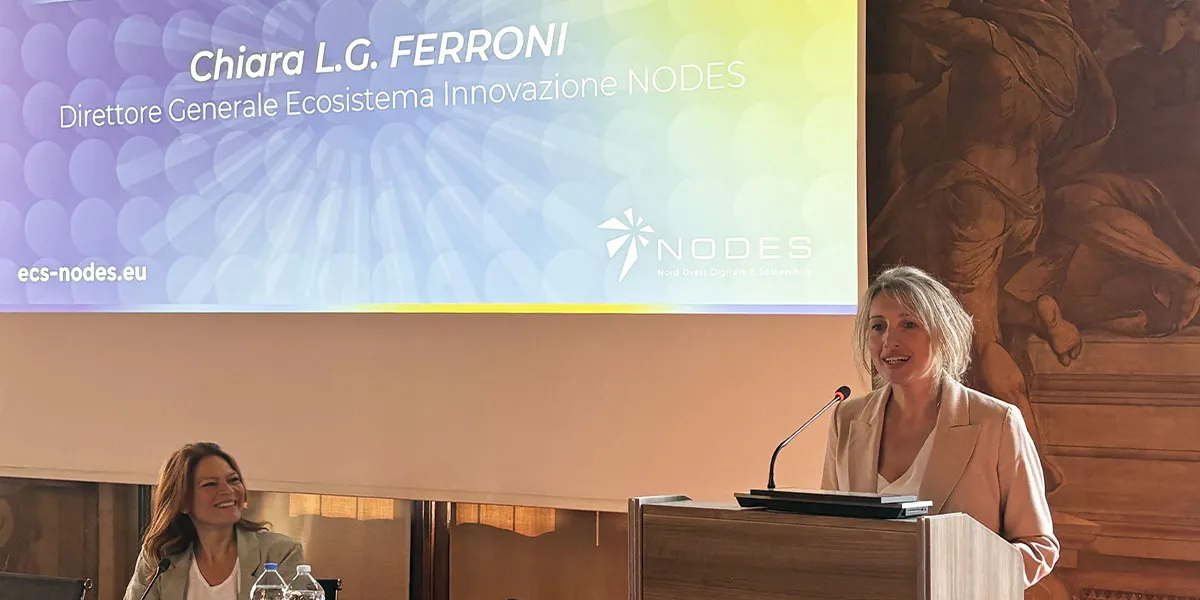
Following this, Director General Chiara L. G. Ferroni presented the main results achieved: seven thematic areas, seven universities involved in a shared governance, and an intensive program of research, training, and technology transfer. Among the most significant figures: 15 flagship projects, 862 scientific publications, 265 deliverables, over 200 training courses involving more than 6,000 participants, and around 700 students engaged in collaboration with businesses, including through industrial PhDs.
On the innovation front, 310 projects with companies were launched, with a total value of €56 million, accompanied by 101 structured collaborations between businesses and universities. The program also fostered the creation of 10 startups and spin-offs, supported 29 acceleration programs, and funded 40 dedicated services.
“An ambitious challenge, especially because it was initially organizational, with a system governance that brought together seven coordinating universities playing a central role, as they identified the needs of the territories and became the directors of innovation processes.” She added, “We did it – we built a true network of connections and collaborations that will continue even beyond the end of the program.”
The spokes tell their story
During the event, representatives from the seven coordinating universities involved in the project also spoke, sharing experiences and perspectives developed within the various thematic areas, the Spokes.
Cristina Prandi, Rector of the Università degli Studi di Torino and coordinator of Spoke 2 – Green Technologies and Sustainable Industries, emphasized that the work focused on process innovation starting from specialized expertise. “Working within the NODES ecosystem,” she highlighted, “meant anticipating what universities today must bring to the table, particularly in terms of lifelong learning.” According to her, the experience of the numerous courses offered was “a true training ground for universities,” and equally important was learning a new way to collaborate with businesses: “We looked at things from their perspective, reversing the paradigm through cascading calls and bringing research closer to the productive system.” She also strongly stressed the need to strengthen doctoral training and raise awareness in the industrial sector about advanced education.
Next, Umberto Piarulli, Vice-Rector of the Università degli Studi dell’Insubria and coordinator of Spoke 3 – Tourism and Culture Industry, focused on “creativity as a driver of innovation.” The NODES experience was described as “a moment of growth not only for the university but for the entire North-West,” creating strong connections between universities, a collaboration that he hopes “will be consolidated and continue in new projects.”
For Spoke 4 – Digital and Sustainable Mountain, Manuela Ceretta, Rector of the Università della Valle d’Aosta, highlighted the specificity of a “unique spoke with a geographical focus.” She noted that mountain territories are particularly exposed to the challenges of the ecological and digital transition: “If the university is better equipped today, it is also thanks to NODES.” The key word is “richness,” understood as discovering the value of the territories and the universities involved. “Accustomed to collaborating internationally, with NODES we learned to work among local partners,” she added, expressing gratitude to the Politecnico di Torino for supporting smaller institutions.
Menico Rizzi, Rector of the Università del Piemonte Orientale and coordinator of Spoke 5 – Health Industry and Silver Economy, highlighted aging as a central challenge: “In a world where health increasingly concerns the elderly, we have built an extensive partnership in which expertise has positively cross-pollinated.” Among the added values, he emphasized the role of SMEs and micro-enterprises, looking to the future: “Funds may end, but the ideas are ready to be developed in European programs like Horizon.” A legacy, he concluded, that will help attract new resources.
For Spoke 6 – Primary Agroindustry, Giancarlo Sangalli, Vice-Rector for Research at the Università di Pavia, spoke about the complexity of working with micro-enterprises, very different from the universities’ usual partners. “It was a challenging activity, but with a strong impact on training and human capital,” involving PhD students, researchers, entrepreneurs, farmers, and citizens. The direction is clear: “to strengthen collaboration between research excellence and the pragmatic vision of local businesses.”
Closing the presentations, Nicola Perullo, Rector of the Università di Scienze Gastronomiche di Pollenzo and coordinator of Spoke 7 – Secondary Agroindustry, emphasized the value of inclusion: “We are among the smallest universities, and NODES represented a great growth opportunity.” He recalled that the project was “the first major program we participated in, and in which we were welcomed,” marking an important milestone in the university’s development path.
At the conclusion of the event, a shared vision emerged: NODES is not only a successfully completed project but also a legacy of relationships, expertise, and operational models to build upon. A solid foundation to strengthen the role of universities as a driver of development and competitiveness in the North-West, continuing the dialogue between research, businesses, and local territories.