On November 13, 2024, the event "Tourism and culture: innovation for the South" was held at the University of Sannio, a partner of Spoke 3 - Tourism and Culture Industry, organized as part of the Roadshow Mezzogiorno initiative.
During the day, Dr. Marco Biolatti of the University of Turin and Prof. Stefania Cerutti of the University of Eastern Piedmont showed those present the results obtained to date with the two flagship projects CIRIL and TOEP; projects aimed at enhancing the territory and culture thanks to the use of new technologies.
The main protagonists of the event were the companies operating in southern Italy, which had the opportunity to win funds from the cascade calls through which they were able to start interesting industrial research and experimental development projects. The companies presented their progress, showed some prototypes and explained to those present how new technologies are revolutionizing the tourism and culture sector in the South but also the Made in Italy sector. Interesting and noteworthy are the applications proposed for conscious tourism and for the protection of Made in Italy and the recognition of counterfeit items. The companies also had the opportunity to discuss and network with each other
At the end of the meeting there was an interesting round table that allowed researchers and companies to discuss what has been done so far and possible actions to take in the future.
An event dedicated to food law and fraud
The conference of November 6, organized at the University of Gastronomic Sciences, was the occasion to disseminate the results of the research carried out by Lorenzo Bairati, Michele Antonio Fino and Elena Corcione, with particular reference to the topic of unfair commercial practices in communication of quality and agri-food sustainability and their legal consequences in terms of consumer protection and competition.
To complete our perspective (mostly focused on EU sources), the participation of external speakers at the conference was also planned (Lawyer Ferraris of the Turin Bar Association and Lt. Col. Raffaello Ciliento and Mar. Ord. Fabio Chiariello – Carabinieri Agri-food Protection Unit of Turin) who focused on the sources of domestic law.
The topics of discussion were greenwashing and Directive 2024/825 of 28 February 2024 on consumer empowerment for the green transition. At the centre of the debate were also the relationship between food fraud and Italian sounding, advertising self-discipline, the role of the AGCM and ordinary and administrative jurisdiction, in addition to commercial fraud in the wine sector.
Spoke 2 attendance at the UniTO stand at Ecomondo 2024, from Tuesday 5th November to Friday 8th November, highlighted the strategic role of the Spoke in the green and digital transition.
In the beautiful Rimini setting, the Spoke had the opportunity to present innovative projects, organise a highly relevant conference on Water Reuse in cooperation with UniTO and Butterfly Area, and create new #synergies.
Water Reuse conference: a focus on water reuse
The conference ‘The reuse of treated wastewater: a tool to mitigate water scarcity and climate change’ explored concrete solutions to address one of the most critical global challenges. After the greetings of Full Professor of Organic Chemistry at the University of Turin Cristina Prandi, Prof. Alessandra Bianco Prevot illustrated UniTO's Water Reuse Platform, highlighting the importance of collaborative strategies to create virtuous supply chains.
Among the topics discussed: European policies and opportunities: Roberta Maffettone (European Commission) presented a regulatory framework to incentivise sustainable practices. Solutions for sustainability: Errico Stravato (Sogesid SpA) and Daniel Novarino (SMAT) explored the potential of water reuse as a concrete response to climate change. Applied research: Innovative projects such as IRRISAFE, which optimises risk management in urban wastewater use, and WalNUT, which supports water recovery in agriculture, showed how research can turn problems into opportunities. Focus on industry and agriculture: SMARTWATER demonstrated how to integrate wastewater reuse in the textile industry, while talks such as that of Elena Anselmetti (Regione Piemonte) explored the reuse of wastewater in agriculture for innovative applications.
The conference emphasised water reuse as a pillar of a circular economy, demonstrating that innovation and collaboration between universities, institutions and businesses are the key to tackling water scarcity and ensuring long-term sustainability.
The future
Ecomondo was a unique opportunity to strengthen the link between Spoke and universities, businesses and other institutions, highlighting that only through collaboration can global challenges be addressed and a more sustainable future promoted.
See you at Ecomondo 2025!
La raccolta per le candidature si è conclusa il 31 ottobre 2024.
Come da DD n. 101 del 25/10/2024 è stato ulteriormente aggiornato nell’Area Riservata alle imprese l'Elenco dei Revisori Legali e delle Società di Revisione Legale per i Bandi a Cascata NODES.
Hub NODES, infatti, al fine di supportare le imprese finanziate a valere sui Bandi a cascata, ha raccolto le candidature spontanee da parte di professionisti che volevano essere inseriti nell'elenco dei Revisori Legali per i Bandi a Cascata.
Le candidature sono state inoltrate via PEC all’indirizzo nodes@pec.it fino al 31 ottobre 2024
Per maggiori dettagli su requisiti e modalità di presentazione si prega di leggere l'avviso pubblicato e la relativa Privacy Policy
Vai alla pagina dell'avviso
On November 6, Università di Catania held the seminar "Power Electronics for electric mobility".
Unict is an integral part of the Electro Flagship Project, the research project dedicated to electric mobility. The university's research team, led by Professor Giacomo Scelba, presented the progress on GaN-based On-board Battery Charging solutions to companies and researchers in the public. A more extensive in-depth analysis of the entire Electro project can be found here.
The seminar dealt in depth with the activities of the research groups of Converters, Electrical Machines and Drives and Electrotechnics of Unict and in particular the results of the two groups for power electronics.
Spoke 1 presented the objectives and results obtained with the funding of industrial research and for the formation of networks and connections between the actors of innovation in the territory, to facilitate the knowledge of the projects and the collaboration between research and industry, between actors of excellence in northern and southern Italy.
The Flagship Project
A prestigious recognition for innovative design
The Appl[e]ause project, developed by Cristian Campagnaro, Raffaele Passaro, Isabella de Vecchi, Nicolò Buselli and Giuseppe Maroncelli, has been selected for the ADI Design Index 2024, a competition organized by ADI Association for Industrial Design.
This work is the result of a collaboration between the PolitoFoodDesignLab of the DAD - Department of Architecture and Design of the Polytechnic University of Turin and PanaceaSocialFarm.
The research aims to enhance the secondary by-products of the Piedmontese fruit agro-industry, specifically identifying apple pomace as a source of dietary fiber and nutrients. Through a codesign approach, the project experiments with the creation of new food products at increasingly advanced levels of technological maturity, highlighting their aesthetic, organoleptic and nutritional aspects to propose new uses for this production waste in the formulation of 7 new baked goods: breadsticks, biscuits, pretzels, chips, pandolce, focaccia and muffins.
Find out more
On October 29th, a delegation from the University of Aachen and the BioeconomyREVIER cluster visited Pavia as part of the NODES project, strengthening collaboration between European academic and research institutions. Researchers from Spoke 6 participated in discussions on sustainable energy, innovative biosensors, and agricultural strategies.
Norma Anglani from the Department of Industrial and Information Engineering presented on developing agricultural energy hubs, focusing on microgrids to optimize energy consumption in farms, as part of the RM1 project under the flagship initiative "Formidabile." Lorenzo Pasotti and Michele Conti from the Department of Civil Engineering and Architecture showcased biosensors engineered from living materials using 3D bioprinting, useful for monitoring agro-industrial processes.
Graziano Rossi from the Department of Earth Sciences and Environment discussed vineyard management strategies in the face of climate change, suggesting alternative crops like olives and hazelnuts. The delegation also visited the Germplasm Bank at the Botanical Garden, guided by Francesco Ferrari, to explore genetic resource conservation.
In the afternoon, Pietro Galinetto and Maddelena Patrini from the Department of Physics introduced advanced optical sensing methods for vineyard management. Daniela Rossi presented techniques for extracting biologically active compounds from viticultural waste, with applications in sectors such as medicine and cosmetics.
The meeting reinforced dialogue between Pavia and Aachen, highlighting the importance of innovative solutions for sustainability in the primary agro-industrial sector.
On 30 and 31 October, a delegation of 9 people from the following research centres Centro di Ricerca di Jülich, Aachen Technical University, Competence Center Bio4MatPro, Technical University of Hamburg, Institute for Technology and Innovation Management visiting thanks to the German Regional Agency AGIT visited Turin as part of the NODES ecosystem, at the premises of the Department of Biotechnology of the University of Turin.
Thursday opened with institutional greetings and a presentation of the University of Turin's research ecosystem by the Full Professor of Organic Chemistry at the University of Turin Cristina Prandi.
The floor was then passed to Tiziana Dell'Olmo, representative of the Piedmont Region, who presented a speech entitled: ‘Piedmont Region: strategies for technology transfer and innovation in the Bioeconomy field’.
On October 29 and 30, a delegation from the University of Aachen and the BioeconomyREVIER cluster visited the universities of Pavia and Turin as part of the NODES project, strengthening collaboration between European academic and research institutions. The meeting saw the collaboration and participation of researchers from Spoke 2, 6 and 7, on Green and sustainability issues specific to our territory.
On the 29th, Giuseppina Sandri from the University of Pavia touched on the topic of smart packaging with a speech entitled Development of innovative materials for packaging and smart-packaging from waste products. The intervention was part of the day dedicated to innovation in the primary agro-industry and was organized in collaboration with Spoke 6.
The themes of Spoke 7 were also presented the following day, when the delegation met researchers at the University of Turin. Here, the researcher from the Polytechnic of Turin Diana Massai presented the challenges and opportunities of cultured meat as an alternative protein food to conventional meat produced through intensive farming as a sustainable, “healthy, green and smart” resource. He also provided an overview of the research network on cultured meat that is being created in Piedmont between the various regional universities, also thanks to the support of the Center for Studies and Research on Sustainable Food.
The meeting strengthened the dialogue between our universities and Aachen, highlighting the innovations that the territory is carrying forward in terms of sustainability in the secondary agro-industry sector.
L'Ecosistema dell'Innovazione NODES è pronto a lanciare sul sito web la nuova sezione "PEOPLE": un canale per promuovere le persone coinvolte direttamente nel progetto.
L'iniziativa è pensata in particolare per il personale appositamente assunto su NODES, non già parte della massa critica: ricercatori a tempo determinato, dottorandi di ricerca, borsisti, assegnisti, tecnologi e tecnici della ricerca.
Nei prossimi giorni saranno inviati via email i questionari per inserire tutte le informazioni che riguardano il proprio lavoro e che si desidera condividere sul sito dell'Ecosistema: un'occasione per farsi conoscere e diventare ancor più protagoniste e protagonisti di quest'avventura.
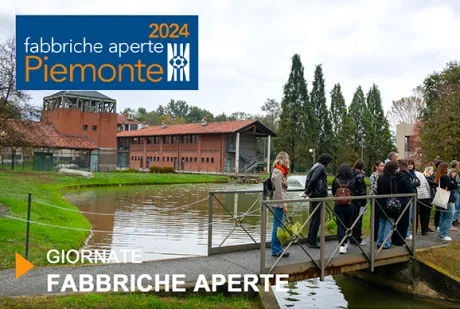
“Inside the heart of Industrial Piemonte, to discover the value of those who create value” is the claim of the fifth edition of ''Open Factories'', the initiatives of the Region of Piemonte aimed at promoting the value of business culture and, in particular, the ''factory'' as an essential element of the social, entrepreneurial and professional wealth of Piemonte.
Also this year, the Bioindustry Park, partner of NODES' Spoke 5, participated together with 140 facilities across the region, which were exceptionally opened their doors for the occasion. The initiative allowed visitors to gain direct insight into industrial production sites and to ''experience firsthand'' the ability to transform ideas and projects into outstanding processes and products.
Over two afternoons, on October 24th and 25th, Colleretto Giacosa headquarters welcomed groups of visitors, predominantly young people interested in the reality of the Science and Technology Park. They were guided through an exploitation of the heart of biotechnological innovation, discovering advanced technologies for the health and life sciences sector.
Over 11.000 visitors registered, and 150 school classes organized a company visit.
The reality of the PArk was presented togeher with companies : Merck Serono, AorticLab, Bridge4pharma and Fondazione ITS Biotecnologie e Nuove Scienze della Vita Piemonte which accompained the participants on a visit to the laboratory with the help of teachers and students.
The event was co-funded by the European Regional Development Fund (ERDF), serving as an opportunity to showcase to citizens the various ways in which ERDF resources can be effectivaly utilized. It was organized in partnership with the NODES project - Innovation Ecosystem for a Digital and Sustainable Northwest, funded by the MUR - PNRR, D.D. n.1054.
Da giovedì 24 a sabato 26 Ottobre 2024 si è tenuta la quinta edizione di Fabbriche Aperte Piemonte, iniziativa della Regione Piemonte che ha permesso di visitare gratuitamente i luoghi della produzione industriale del territorio piemontese.
Più di 140 stabilimenti hanno aperto le loro porte, permettendo al grande pubblico di scoprire il valore che si nasconde dentro i luoghi, le fabbriche, gli stabilimenti e i laboratori che rappresentano le eccellenze economiche e tecnologiche del territorio.
L’Ecosistema dell'innovazione NODES - Nord Ovest Digitale E Sostenibile - ha partecipato all’iniziativa attraverso alcuni importanti partners di progetto che, grazie a Fabbriche Aperte Piemonte, hanno potuto far conoscere i i loro parchi scientifici tecnologici, la ricerca e le innovazioni: BIOINDUSTRY PARK SILVANO FUMERO sui temi della salute umana ed ENVIRONMENT PARK su sostenibilità ambientale come motore di competitività.
Buon successo anche per le imprese protagoniste dei Progetti finanziati attraverso i Bandi a Cascata dell’Ecosistema NODES, che, durante le giornate, hanno aperto le loro porte e messo a disposizione interessanti percorsi di visita:
Dr. Alessandra Audisio from the Politecnico di Torino was awarded the Best Scientific Work for her innovative technique to monitor mobility in everyday life environments.
In the splendid setting of the hotel ''La Palma di Stresa'', overlooking Lake Maggiore, the MOVEWISE project was presented to the Italian Society for Movement Analysis in Clinics(of which Prof. Cereatti is the president) during the XXIV National Congress.
The project of the Research Module 3 of the flagship project TINCARE, aims to develop a wearable system for monitoring mobility parameters most related to the risk of falls in everyday life. The dissemination took place in oral form and through poster, presented by ing. Marco Caruso, by dr. Marco Boldreghini, by prof. Valentina Agostini and by prof Andrea Cereatti, who facilitated a rich discussion with colleagues and experts in the field.
The most exciting news, however, was the awarding of thE SIAMOC 2024 Best Works Society Prize to dr. Alessandra Audisio, a young PhD student at the Polytechnic University of Turin in Prof. Cereatti's group, in collaboration with engineers Daniele Fortunato, Paolo Tasca and Marco Caruso. Her study within the MOVEWISE project, titled ''Validation of a new method for center of mass trajectory estimation in simulated daily life activities based on inertial and barometric pressure data fusion'', has allowed a significant advancement in reconstructing the vertical displacement of the center of mass during daily activities using inertial and environmental pressure sensors through advanced sensor fusion techniques, thus overcoming previous technological limitations. Thanks to the recognition received, the work will undergo a fast-track review process for publication in the prestigious Journal of Biomechanics.
Anyone who need more information can send an email to andrea.cereatti@polito.it.
On Thursday 24 October, in Potenza, at the Macchia Romana University Campus of the University of Basilicata, Spoke 2 - Green Technologies and Sustainable Industries and Spoke 4 - Digital and Sustainable Mountain organised with the partner University of Basilicata the event ‘Ideas and Projects of Innovation and Sustainability in Motion’. A day full of speeches, round tables, poster sessions and pitches by the winning companies of the NODES ‘Line A Mezzogiorno’ cascade calls, which illustrated the projects and the first results obtained so far. A meeting where new connections were made between the protagonists of change and innovation in the South!