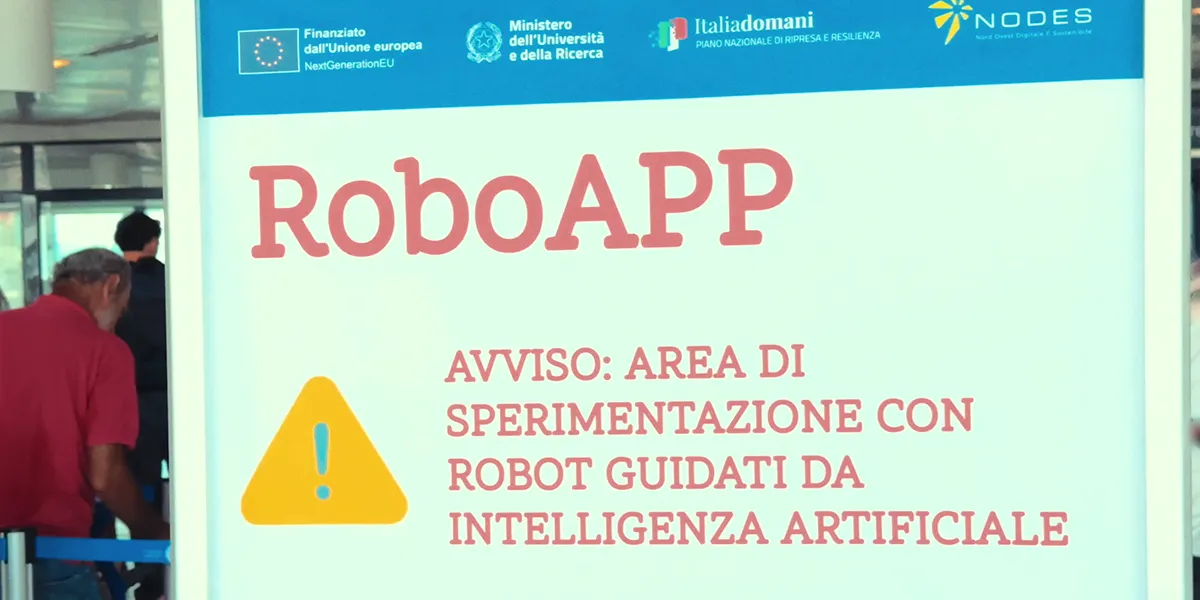
RoboAPP: The future of AI applied to robotics takes shape at Turin Airport
A new frontier of artificial intelligence applied to robotics was explored on July 18, 2025, at Turin International Airport during the event “The Future of AI Applied to Robotics”, the official launch of the RoboAPP Proof of Concept, developed by Spoke 1 – Aerospace and Sustainable Mobility within the NODES Program.
The event provided a platform for dialogue and exchange among representatives of institutions, university researchers, entrepreneurs, and research centers to explore the potential, challenges, and future scenarios related to the use of AI in real, complex, and dynamic environments.
RoboAPP: intelligent robotics at the service of people
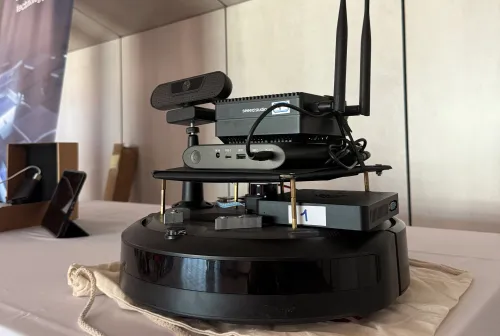
The RoboAPP – Robotic Aggregate Programming Platform – concretely demonstrates what Artificial Intelligence can achieve when integrated into intelligent and autonomous robots, capable of moving, adapting, and acting in physical spaces. Applications cover critical areas such as logistics, smart cities, and precision agriculture.
The system relies on coordinated management between Autonomous Mobile Robots (AMR) and Small Language Models (SLM), enabling dynamic interaction and real-time contextual processing. This is complemented by an advanced digital infrastructure based on aggregate programming, intelligent sensing, resilient communication, and energy efficiency.
A platform for intelligent spaces
RoboAPP aims to support managers of complex facilities in automating and digitizing environments, making them more efficient, safe, and responsive. The airport setting – both the event venue and the site of the first trial – proved to be an ideal testing ground to evaluate the system’s robustness and usefulness in real conditions. As highlighted by Prof. Paola Pisano, who leads the project, “RoboAPP represents a new intelligent infrastructure, designed to integrate into urban and industrial contexts and respond adaptively to the needs of the territory.”
A discussion of visions and perspectives
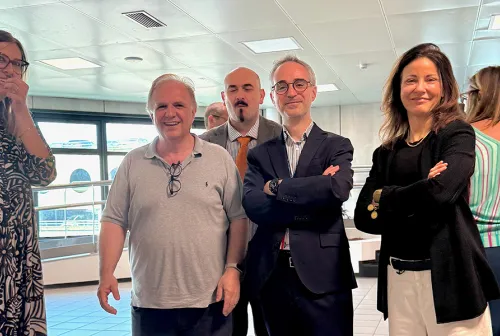
During the Executive Breakfast, experts from academia, industry, and the innovation sector – including the NODES team from the University of Turin, MIT Technology Review Italy, and other key stakeholders – discussed the role of AI as an enabling force for autonomous robotic systems.
The discussion highlighted challenges related to scalability, social and economic impacts, and the transformative opportunities these technologies offer in organizing and managing spaces, activities, and the communities of the future.
A look to the future
The Turin meeting provided a concrete snapshot of how artificial intelligence is moving beyond digital boundaries into the physical spaces we inhabit daily, transforming interactions between people, machines, and environments. A future already in testing that promises to revolutionize strategic sectors of our society.